

Ethiopia: What to Remember From the African Climate Summit?


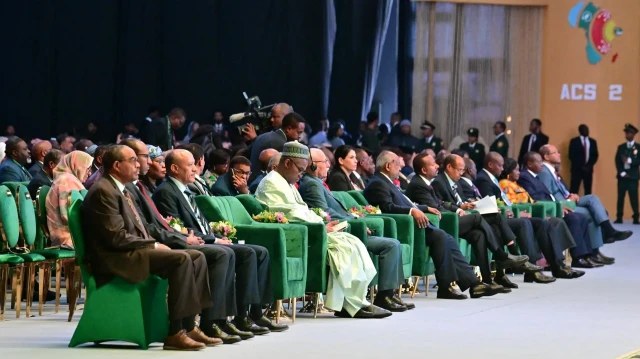
The African Climate Summit took place this week in Ethiopia and ended on September 10, 2025. A strategic meeting for the continent, which remains one of the most impacted by current climate change. This second summit ended with the announcement of the Addis Ababa Declaration, which follows the Nairobi Declaration, signed at the first summit held in Kenya in 2023.
For two days, more than 40 heads of state and government met to clarify the continent's priorities in terms of environmental preservation, ahead of the major international meetings to come. They hope to be able to have more influence in the negotiations at the Cop30 scheduled for November in Belém, in northern Brazil.
The Context
Africa is increasingly impacted by the climate. Floods are on the rise in West Africa. Countries such as Senegal, Niger and Mali have been impacted several times in recent years, with its share of consequences, including degraded housing, receding rivers, famine and insalubrity. In East Africa, several countries, including Ethiopia, which hosted this second summit, have been heavily hit by drought in recent years. In 2022, for example, the UN Office for Humanitarian Affairs (OCHA) estimated that in Ethiopia, between 5.5 and 6.5 million people (or between 5 and 6% of the population) were severely food insecure due to drought.
This is also the case in Malawi, Zambia and Zimbabwe, where harvests have been severely affected by this cyclical change. In May 2025, the active El Niño phenomenon in the Horn of Africa caused heavy rainfall in Somalia, causing the death of at least seven people and damaging several key infrastructure. The consequences of this vulnerability are to be found in the level of pollution emitted by developed countries that burn fossil fuels.
In addition, according to Jorge Patino, a geographer at the OECD, the continent's upcoming rapid urbanization requires reflection. "Having better green infrastructure programs is very important because it helps public health and saves money in the long run. It also helps with adaptation and risk mitigation," he explains.
It is in this perspective and to further influence global resilience policies on the climate, that this summit is a strategic meeting for Africa.
The Strategic Axes İdentified
The summit allowed the actors to index the solutions more, more than the problems already known. "Too often, the African story in climate summits boils down to saying what we lack: lack of money, lack of technology and lack of time. This time, let's start by saying what we have. We have the youngest population, which exudes creativity and innovation, the fastest-growing solar sector in the world, the last carbon sinks with our forests, peatlands and coastlines," explained Ethiopian Prime Minister Abiy Ahmed.
Ethiopian President Taye Atske Selassie has notably retained three pillars from the Addis Ababa Declaration. The first is to accelerate the development of renewable energies to make Africa a green industrial powerhouse. "First of all, we are going to set our future in motion. We are committed to accelerating the development of renewable energy and infrastructure. This will not only make energy accessible, but it will also position Africa as a green industrial powerhouse," he said.
The second pillar is the formation of a coalition of countries that possess essential minerals to ensure greater transparency and that these countries get a fair share of the benefits. Finally, the last concerns the protection of cultural heritage such as forests.
For his part, the representative of the African Union, Bankoye Adeoye, quoted by RFI, said he felt proud at the end of this summit. " We have not shied away from difficult conversations," he insisted. According to him, it is not a question of closing this summit but of opening a new chapter and it will begin next November at COP30 in Brazil.
In short, this summit has allowed the continent's leaders to move further towards more solutions to climate problems. Africa is the least polluted continent in the world, but is paying a heavy price for the effects of climate change, which threatens to paralyze all areas of development if nothing is done to improve current data. This is why the climate issue must be prioritized in the policies of the African Union, but the continent must also make its voice heard and influence global policies on the issue.

Reference



Yorumlar