

Africa: Between Attractiveness and Economic Returns, Sport Beyond Competition


Africa is increasingly asserting itself in the industrialisation of sport, as well as in the use of sport as a diplomatic showcase and instrument of country branding. In recent years, many countries around the world have embraced sport as a new tool of soft power, designed to strengthen their image and attractiveness. This is notably the case of Qatar with the 2022 FIFA World Cup, Saudi Arabia with the Saudi Pro League, and Azerbaijan with Formula 1. In Africa, this strategic trend is clearly gaining traction. Rwanda and Morocco, for instance, have distinguished themselves by attracting continental and global sporting investments. Continental sporting events have undergone significant evolution in terms of organisation, attractiveness, and visibility, enabling host countries to use these competitions as a showcase. This article analyses the strategic significance of sport for states and examines the most prominent sporting events organised on the continent in recent years.
Sport as a Soft Power Tool
Today, sport has become a soft power tool. Soft power is defined as a lever of co-optation designed to reinforce one’s credibility, legitimacy, and attractiveness in the eyes of others, notably through political values, foreign policy, culture, and economics. Alexander L. Vuving notably emphasises that attractiveness is primarily determined by the currencies of soft power, namely: beauty (the harmonious resonance evoked when one embodies ideals, values, causes, or visions that are widely shared), benevolence (the positive attitudes conveyed in one’s dealings with others, particularly with the audience in question), and brilliance (the high performance achieved when executing tasks with excellence) (Vuving, 2009). Sport has become a remarkable strategic lever that now generates all three of these currencies.
The reason Qatar, Azerbaijan, Saudi Arabia, and Rwanda have invested heavily in sport and its attributes (infrastructure, events, players, clubs, etc.) is that sport has become a platform not only to strengthen a country’s national brand (country/national branding), but also to showcase a nation’s economic, touristic, human, and infrastructural potential. Sporting events such as the FIFA World Cup, the Super Bowl, or the Olympic Games offer remarkable opportunities for a country to demonstrate its qualities and assets, reinforce its brand image, and enhance its overall attractiveness.

Sporting Events in Africa: Economic, Diplomatic, and Attractiveness Returns
The African continent has progressively affirmed its capacity to host and organise competitions of international standing, transforming these events into genuine levers of influence for host countries.
The Basketball Africa League (BAL)
Launched in 2021 by the NBA, the Basketball Africa League (BAL) constitutes one of the most structurally significant sporting initiatives of the decade on the continent. By relying on cities such as Kigali, Dakar, Lagos, and Cairo for its various editions, the BAL has enabled several African countries to position themselves as credible sporting hubs in the eyes of investors and international institutions. Rwanda, in particular, has been able to capitalise on its recurring role as host to reinforce its image as a safe, modern, and business-friendly destination — a central pillar of the country branding strategy pursued by Kigali for several years. Beyond the spectacle of sport itself, the BAL generates direct economic returns (hospitality, transport, commerce) as well as symbolic ones, by associating the African continent with the standards of excellence of the world’s most prestigious basketball league.
The Africa Cup of Nations (AFCON)
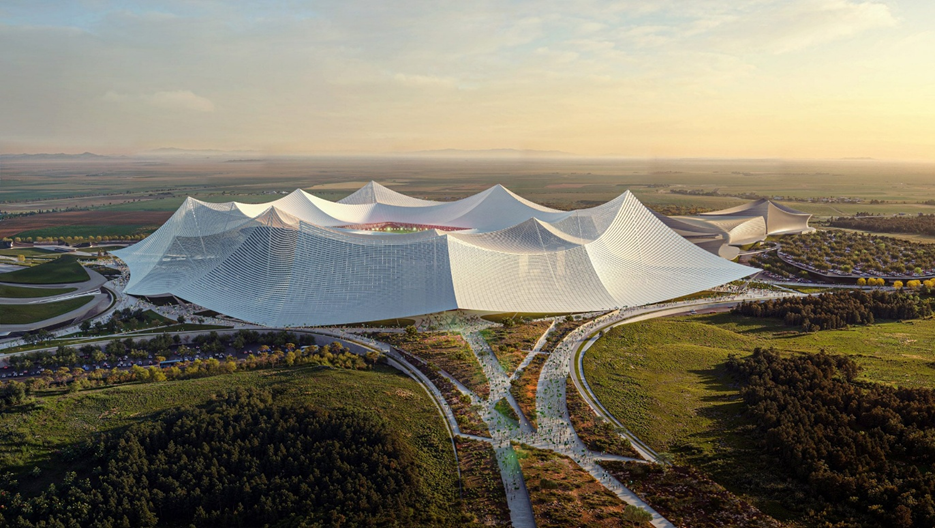
The Africa Cup of Nations (AFCON) remains the most widely followed sporting event on the continent, bringing together hundreds of millions of viewers worldwide with each edition. Over the years, the competition has gained considerably in prestige and organisational quality: the most recent edition hosted by Morocco, which rose to meet the standards of the global elite, demonstrated the continent’s capacity to mobilise high-quality infrastructure, attract international broadcasters, and generate widespread popular enthusiasm. For host countries, the AFCON represents far more than a football tournament: it is an opportunity to modernise stadiums, rehabilitate roads and hotels, stimulate tourism, and project a positive image on the world stage. For countries such as Côte d’Ivoire, host of the 2023 edition, the AFCON provided an occasion to present a stabilised, ambitious, and outward-looking nation following years marked by political crises.
The U
CI Road World Championships in Rwanda (2025)
Rwanda achieved a remarkable diplomatic and media coup by hosting the UCI Road World Championships in 2025 — a historic first for the African continent. Kigali thus joined the exclusive circle of cities to have organised one of the most prestigious cycling competitions in the world. This event perfectly illustrates the “sport as soft power” strategy championed by President Paul Kagame: by investing heavily in sporting infrastructure and in partnerships with institutions such as World Cycling, Rwanda is building a reputation as a reliable, dynamic, and visionary host nation. The returns extend far beyond the sporting arena: international media coverage, attractiveness for foreign investors, national pride, and the valorisation of the country as a tourist and business destination.

The Dakar 2026 Youth Olympic Games
The awarding of the 2026 Youth Olympic Games to Dakar represents a historic turning point: for the first time, an Olympic Games — even in its youth format — will be organised on African soil. This decision by the International Olympic Committee constitutes a strong recognition of Africa’s potential in the organisation of major sporting events. The stakes for Senegal are considerable: the Dakar YOG offer an opportunity to showcase new infrastructure, promote the country to a global audience, and position Dakar as the continent’s sporting and cultural capital. At a time when the city also aspires to establish itself as an economic and technological hub in West Africa, the organisation of this event forms part of a broader nation branding strategy pursued by the Senegalese authorities. The YOG also carry a message to African youth: the continent is capable of welcoming the world.
Conclusion
Sport has become, in Africa as elsewhere, a fully-fledged instrument of soft power. The examples analysed in this article — the BAL, the AFCON, the UCI Road World Championships in Rwanda, and the Dakar Youth Olympic Games — attest to a growing continental dynamic, in which African states are no longer content to be mere participants in major global competitions, but are asserting themselves as ambitious and strategically minded organisers.
Through these events, host countries mobilise the three currencies of soft power identified by Vuving: beauty, by projecting values of unity, excellence, and collective pride; benevolence, by welcoming the world with hospitality and demonstrating openness; and brilliance, by successfully meeting complex organisational challenges. These competitions cannot be reduced to their sporting dimension alone — they are national showcases, investment accelerators, catalysts for infrastructure modernisation, and vectors of touristic attractiveness.
Africa is not, however, immune to the pitfalls that threaten any sportswashing strategy: the temptation to privilege image at the expense of local populations, or to invest in costly infrastructure without a long-term vision for post-event management. The lasting success of this strategy will require African states to ground their sporting investments in coherent development policies that genuinely benefit their citizens. It is on this condition that sport will become not only a tool of international influence, but also an authentic lever of social and economic transformation for the continent.

References
Lô, Alioune Aboutalib
• Lô, A. A. (2023). “Leveraging Sports for Public Diplomacy Outcomes: The Case of Qatar’s FIFA World Cup 2022”. Anadolu Akademi Sosyal Bilimler Dergisi, 5(1), 33–49. https://izlik.org/JA72HE73RN
• Lô, A. A. (2021, October 26). “Spor Diplomasisi ve Diplomatik Sonuçlar: Ruanda Örneği”. AKEM. https://www.akem.org.tr/post/makale-spor-diplomasisi-ve-diplomatik-sonuçlar-ruanda-örneği
• Lô, A. A. (n.d.). “Comment faire des JOJ 2026 un outil de soft power?”. LinkedIn Pulse. Retrieved March 14, 2026, from https://www.linkedin.com/pulse/comment-faire-des-joj-2026-un-outil-de-soft-power-2znpf/
Nye, Joseph S.
• Nye, J. S. (1990). “Soft Power”. Foreign Policy, 80, 153–171. https://doi.org/10.2307/1148580
• Nye, J. S. (2004). Soft Power: The Means to Success in World Politics. PublicAffairs.
• Nye, J. S. (2008). “Public Diplomacy and Soft Power”. The Annals of the American Academy of Political and Social Science, 616, 94–109.
• Nye, J. S. (2011). The Future of Power. PublicAffairs.
Vuving, Alexander L.
• Vuving, A. L. (2009). “How Soft Power Works”. SSRN Electronic Journal. https://doi.org/10.2139/ssrn.1466220


Yorumlar