

Mega-Sport Event Investments and Structural Transformation in Africa: Morocco’s 2030 FIFA World Cup Strategy as a Catalyst for Continental Change

The evolving political economy of sport in Africa is increasingly shaped by strategic investments tied to mega-events, with Morocco’s co-hosting of the 2030 FIFA World Cup emerging as a defining contemporary case. This initiative reflects a broader continental shift from viewing sport as a peripheral cultural activity to positioning it as a core instrument of economic diversification, infrastructure development, and global integration. Unlike earlier episodic investments associated with one-off tournaments, Morocco’s approach signals a long-horizon strategy embedded within national development planning. With projected expenditures exceeding $15 billion, the country is channeling capital into stadium construction, high-speed rail expansion, airport upgrades, hospitality ecosystems, and digital infrastructure (Shore Africa, 2025). These investments are not merely designed to meet FIFA hosting requirements but to generate sustained economic spillovers across multiple sectors, thereby aligning sport with industrial policy and long-term growth trajectories.

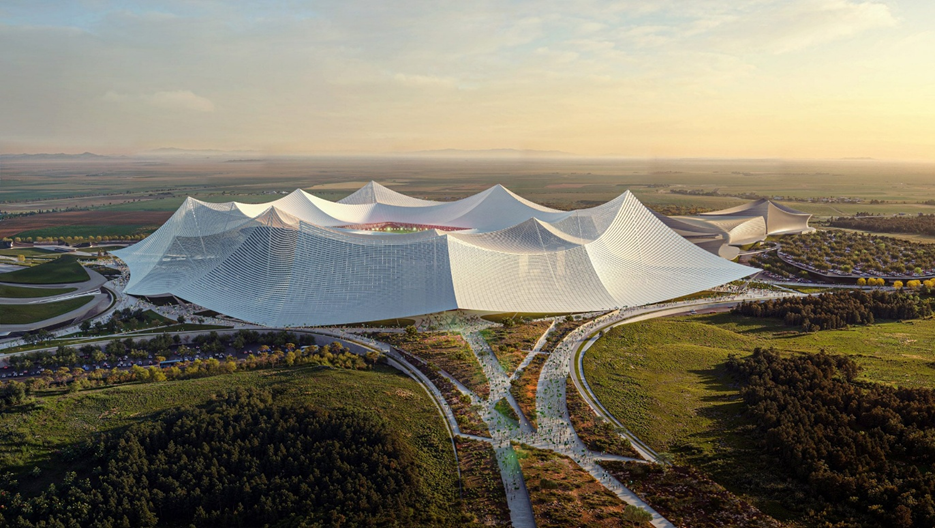
Figure 1: Morocco is developing the Grand Stade Hassan II (Casablanca), set to become the world’s largest football stadium with a 115,000-seat capacity and an estimated cost of $500 million. Construction began in August 2024, led by major national firms, and the project is located on a 100-hectare site near El Mansouria, about 40 km from Casablanca. Scheduled for completion by 2028, the stadium is fully funded by the Moroccan government in partnership with the CDG and serves as a flagship project in Morocco’s preparations for the 2030 FIFA World Cup.
Economic Transformation, Tourism Growth, and Continental Spillovers
At the macroeconomic level, the rationale for mega-event investment in Africa must be understood within the context of structural transformation. Many African economies remain dependent on primary commodities, making diversification into service-driven sectors, such as tourism, entertainment, and sports, both urgent and strategic. Morocco’s World Cup preparations are explicitly linked to its ambition to increase annual tourist arrivals to over 26 million by 2030, up from approximately 14 million in recent years (Moroccan Ministry of Tourism, 2024). Empirical evidence suggests that mega-events can boost tourism revenues by 20–30% in the medium term, particularly when supported by complementary infrastructure and effective destination branding. In Morocco’s case, the integration of transport networks, such as the extension of the Al Boraq high-speed rail line, enhances regional connectivity, reducing logistical bottlenecks and improving the overall visitor experience. This reflects a nuanced understanding that the economic returns of mega-events are contingent not only on the event itself but on the broader ecosystem within which it is embedded.
Continental Spillovers and Investment Signaling Effects
Beyond national boundaries, Morocco’s investment strategy is generating important demonstration effects across Africa. Countries such as Egypt, Nigeria, and South Africa are increasingly exploring similar models of sports-led development, particularly through public-private partnerships (PPPs). The African sports market is projected to exceed $20 billion by 2035, driven by rising consumer demand, urbanization, and increased media penetration (Shore Africa, 2025). This growth trajectory is attracting global investors, including private equity firms and multinational sponsors, who view Africa as an underexploited frontier in the global sports economy. The World Cup, therefore, functions not only as a national project but as a continental signal to international markets regarding Africa’s readiness to host and manage large-scale sporting investments.
However, the economic logic of mega-event hosting is not without controversy. A substantial body of literature highlights the risks associated with cost overruns, underutilized infrastructure, and limited long-term returns. The experience of the 2010 FIFA World Cup in South Africa is frequently cited in this regard. While the tournament enhanced global visibility and catalyzed infrastructure development, several stadiums have since struggled with maintenance costs and low utilization rates. Morocco appears to be internalizing these lessons by prioritizing multi-purpose stadium designs and integrating sports infrastructure into broader urban development plans. For example, new stadiums are being conceptualized as mixed-use complexes capable of hosting concerts, conferences, and community events, thereby ensuring year-round revenue streams. This approach aligns with best practices in sports economics, where asset utilization rates are critical determinants of investment viability.
Sectoral Impacts: Football, Athletics, and Human Capital Development
In the domain of football, the World Cup investment is expected to have transformative effects on Africa’s most commercially significant sport. Football accounts for the majority of sports-related revenues on the continent, including sponsorships, broadcasting rights, and merchandising. The Confederation of African Football (CAF) recently reported a 90% increase in commercial revenues for the Africa Cup of Nations (AFCON), reflecting growing investor confidence and market expansion (Reuters, 2026). Improved infrastructure and global exposure associated with the World Cup are likely to further enhance the commercial value of African football. This includes increased bargaining power in media rights negotiations, greater attractiveness to international sponsors, and improved talent retention within domestic leagues. Currently, Africa exports a significant portion of its football talent to European leagues, capturing only a fraction of the associated economic value. Strengthening domestic leagues through better infrastructure and governance could help reverse this trend, enabling African countries to retain a larger share of the football value chain.

Figure 2: Iconic South African Stadium Undergoing R240 Million Facelift and Extended Refurbishment: eThekwini seeks to extend the Moses Mabhida Stadium upgrade beyond December 2025 to address urgent structural repairs. While major enhancements and new tourist features progress, additional work is required to ensure safety, structural integrity, and compliance with international standards.
The spillover effects of mega-event investments extend beyond football to other sporting disciplines, particularly athletics and Olympic sports. Africa has long maintained a comparative advantage in middle- and long-distance running, with countries such as Kenya and Ethiopia consistently dominating global competitions. Despite this success, investment in athletics infrastructure and sports science has historically been limited. The development of high-performance training centers, sports medicine facilities, and athlete support programs as part of broader sports investment strategies could significantly enhance performance outcomes. Africa currently accounts for approximately 13–15% of Olympic medals in athletics, a figure that could increase with targeted investment in training and development (International Olympic Committee, 2025). Moreover, improved infrastructure can facilitate talent identification and nurturing at the grassroots level, expanding the pipeline of elite athletes.

Kenya finished second at the World Athletics Championships in Tokyo, behind the USA, with a total of 7 gold, 2 silver, and 2 bronze medals. A highlight was Jackline Odira’s championship record win in the women’s 800m (1:54.62), marking a historic performance.
From a socio-economic perspective, the labor market implications of mega-event investments are substantial. The construction and operation of sports infrastructure generate employment across multiple sectors, including engineering, construction, hospitality, and event management. In Morocco, World Cup-related projects are expected to create tens of thousands of jobs, both directly and indirectly. More importantly, these investments contribute to human capital development by fostering skills transfer and capacity building. For instance, the adoption of advanced construction technologies and project management practices can enhance local expertise, with potential spillovers into other sectors of the economy. This aligns with endogenous growth theory, which emphasizes the role of human capital and innovation in driving long-term economic development.
Governance, Sustainability, and Africa’s Emerging Global Sporting Influence
Another critical dimension is the role of sports in enhancing Africa’s global image and soft power. Mega-events provide a platform for countries to showcase their cultural heritage, economic potential, and political stability to a global audience. Morocco’s World Cup bid, in partnership with European countries, represents a model of intercontinental cooperation that challenges traditional North-South dynamics. This collaborative approach may redefine the governance of global sports events, making them more inclusive and geographically diverse. For Africa, increased visibility on the global stage can translate into higher foreign direct investment (FDI), improved diplomatic relations, and greater participation in international decision-making processes.
Nevertheless, the success of mega-event investments depends critically on governance and institutional quality. Issues such as corruption, inefficiency, and lack of transparency can undermine the potential benefits of sports investments. Effective governance requires robust regulatory frameworks, transparent procurement processes, and strong accountability mechanisms. In this context, international organizations and development partners can play a supportive role by providing technical assistance and promoting best practices. Furthermore, community engagement is essential to ensure that the benefits of investments are widely distributed and that local populations are not marginalized in the development process.
Environmental sustainability is another increasingly important consideration in sports investment. Large-scale infrastructure projects can have significant environmental impacts, including carbon emissions, resource depletion, and habitat disruption. Morocco has sought to address these concerns by incorporating sustainability principles into its World Cup planning, including the use of renewable energy, water conservation measures, and eco-friendly construction materials. This aligns with global trends toward “green sports events,” which aim to minimize environmental footprints while maximizing social and economic benefits. For Africa, integrating sustainability into sports investment is particularly important given the continent’s vulnerability to climate change and resource constraints.

Sustainable Stadium concept
Financial sustainability also remains a key challenge. Mega-event investments require substantial upfront capital, often financed through a combination of public funds, private investment, and international loans. Ensuring that these investments generate sufficient returns to justify their costs is a complex task. This requires careful project selection, realistic demand forecasting, and effective risk management. In Morocco’s case, the emphasis on multi-use infrastructure and integration with broader economic strategies enhances the likelihood of achieving positive returns. However, continuous monitoring and evaluation will be essential to assess the long-term impact of these investments.
In conclusion, Morocco’s preparations for the 2030 FIFA World Cup represent a paradigmatic shift in Africa’s approach to sports investment. By embedding mega-event hosting within a comprehensive development strategy, Morocco is leveraging sport as a catalyst for economic transformation, infrastructure modernization, and global integration. The implications extend beyond national boundaries, offering valuable lessons for other African countries seeking to harness the potential of sports as an engine of growth. While challenges related to governance, financial sustainability, and environmental impact remain, the strategic orientation of current investments suggests a more mature and sophisticated approach to sports economics in Africa. If successfully implemented, this model could redefine the continent’s position in the global sports economy, transforming it from a peripheral player into a central hub of sporting excellence and investment.
References
International Olympic Committee. (2023). Olympic performance statistics by continent.
Reuters. (2026). Africa Cup of Nations commercial revenue up by 90%.
Shore Africa. (2025). Africa’s biggest sports investments shaping the future.
Moroccan Ministry of Tourism. (2024). Tourism development projections toward 2030.
African Development Bank. (2023). Infrastructure financing gap in Africa.


Yorumlar