

South Africa and The G20 Leader: Key Takeaways From The Summit
- Adem Aman Shibu

- 28 Şub
- 6 dakikada okunur

Introduction
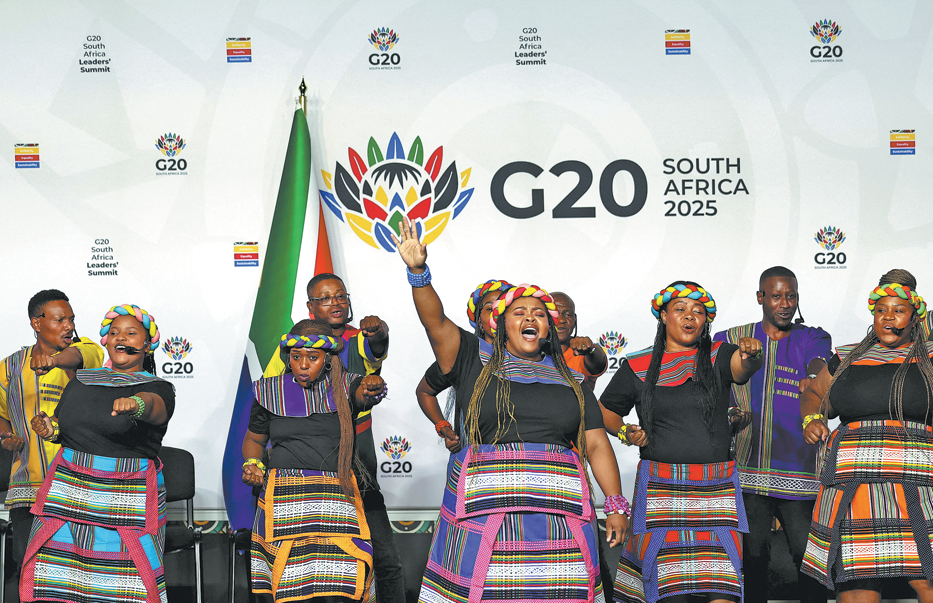
In 2025, the G20 Leaders summit was held in Johannesburg, South Africa, within the scope of “Solidarity, Equality, Sustainability.” This milestone event, being organized for the first time in Africa, highlights Africa’s growing role in global affairs. The summit brought together leaders from the developed economies and emerging countries of the globe around a shared, challenging political and socio-economic development agenda. The African development agenda was integrated and cooperated with the agenda on the Africa Continental Free Trade Area (AfCFTA) in line with Agenda 20263 and Agenda 2030 throughout the discussion, in the declaration during the G20 press releases. The summit, which was the African Union, participated as a G20 member for the first time, also indicates that Africa was at the core of the official discussions. The forum coverage revealed that African realities were treated as a pivotal concern rather than a marginal one. These also reflect the continent’s primacy in social, political, and economic transformation, as well as climate resilience and inclusive growth, within a rapidly changing world order.
This article aims to provide insights into the G20 Leaders’ Summit in Johannesburg, framed within the spirit of Ubuntu, with its pros and cons in light of the forum's key takeaways.
The Historical Perspective of the Summit
Although this forum was historic for its Africa-centered focus and held on African soil for the first time. However, it was also affected by limited participation, as the United States did not attend by explicitly boycotting. Similarly, leaders from Argentina, China, Indonesia, and Mexico were also absent. Their absences raised important questions about the effectiveness and cohesion of the meeting. Related to their absence, the European Parliament expressed concern over the “poor participation of leaders,” noting that the United States’ boycott and the absence of other heads of state weakened multilateral cooperation within the G20. While such developments also placed a pessimistic view on the summit, which carried a high responsibility for the forum host country in a challenging situation. Notably, in one way or another other the historical summit represented a symbolic shift away from traditional venues in the Global North to the Global South.

This development progress reflected a broader shift in embedding African perspectives and priorities at the core of international affairs and global decision-making processes, gradually. More importantly, the Leaders’ Declaration explicitly grounded its commitments in the spirit of the indigenous African philosophy, known as Ubuntu, commonly expressed as “I am because we are,” emphasizing unity, solidarity, and shared prosperity.
Pros of the Summit: Gains for Africa and the Global South
The summit has a significant meaning and major impact on the Global South and on the dominant geopolitical socio-economic counterpart, particularly because it was held in South Africa, one of the founders of the BRICS+ bloc. The summit put Africa’s development challenges at the core of the G20 agenda for the first time. In one way or another, these developments boosted the visibility of the Global South’s impact on shaping the future world order, as issues long discussed in sound strategic terms for African policy circles—such as energy access, debt sustainability, and climate-finance gaps—were elevated to commitments by global powers.
Not only does the South bloc have global visibility and shape the agenda, but it also has efforts to enhance Africa’s representation in global financial institutions and inclusion at far. For instance, through IMF governance reforms and dedicated positions — signal long-overdue institutional inclusion. These reforms may improve policy influence for African nations in multilateral decision-making structures. During the summit, Programs like Mission 300 and critical minerals frameworks represent actionable partnerships with potential long-term impacts on energy access and industrial transformation in Africa, were discussed. These initiatives, if fully funded and implemented, can accelerate sustainable development pathways towards new initiatives and frameworks.
Last but not least, the summit plays a pivotal role in the visibility and agenda-shaping power of the global South, institutional recognition and inclusion, new initiatives, and framework at far.
Major Challenges: The Limits of Consensus
Africa’s position within the G20 framework remains largely instrumental rather than substantive. Even under conditions of stability and economic potential, the continent attracts limited attention unless its resources serve external interests. At present, global powers are at stake and often demonstrate reluctance when engagement requires a genuine, mutually beneficial effect for the African community. The absence of the U.S. president from the South Africa forum illustrates this selective commitment, as the stated justifications lacked substantive global relevance. More broadly, imperial and capitalist power approaches toward Africa often bypass established legal standards, development principles, economic and social justice, and humanitarian norms, resulting in engagements that fall short of a balanced, win-win, sound strategic development. For instance, Western media persistently presents negative narratives about Africa in mainstream broadcasting, reinforcing pessimistic perceptions of the continent (famine, conflict, poverty, disease, unemployment, etc.), undermining African self-confidence, and contributing to structural challenges such as promote immigration, brain drain, as at most skilled individuals increasingly seek opportunities in Western economies by leaving the African continent in search of a better life.
Accordingly, a glaring downside was the United States’ absence at the highest level, driven by diplomatic tensions with the host nation. The boycott and the subsequent refusal to engage fully weakened the potential for unified global leadership on pressing issues. This also highlighted geopolitical fragmentation, particularly among Global South member countries, in the absence of the United States. As a consequence, this issue has the potential to deepen global political divisions, particularly the East–West or North–South bloc dichotomy, especially in the United States, which was absent from discussions on climate finance and debt commitments, with all dominance over the century as the central hegemonic power in economic and foreign policy at the global level. The absence of concrete commitments in the Declaration raises concerns about its impact on climate finance and debt restructuring, as many pledges remain general and non-binding. While the G20 Leaders discussed current conflicts like those in Sudan, Ukraine, and the Palestinian territories, they struggled to reach a consensus on these geopolitical crises, highlighting challenges in aligning diverse regional interests.

Key Thematic Takeaways
From the first African G20 leaders gathering in Africa, there are immense subject matter takeaways. One of the significant outcomes was the collective emphasis on climate stability and renewable energy transitions, with a strong focus on just and inclusive solutions towards economically emerging countries as well. The declaration endorsed plans to boost global renewable energy capacity by 2030, particularly in Africa, and took into account encouraging large-scale financing for climate adaptation and mitigation. Therefore, taking impactful action on climate change and the just energy transition is crucial. Over 600 million people in Africa currently lack access to electricity due to significant energy deficiencies, and approximately 1 billion individuals in Africa do not have access to clean cooking solutions. In this context, the G20's endorsement of the Mission 300 initiatives, which aim to provide electricity to 300 million Africans by 2030, demonstrates a meaningful alignment between global commitments and the developmental needs of the African continent.
A second major issue was the mounting concern about debt vulnerabilities facing low-income countries (i.e., African). Above all, African economies have been struggling with high financing costs, limited financial capacities, and burdensome external debt, in particular. During the summit, the Leaders’ Declaration addressed obstacles to debt treatment and pledged support for robust frameworks to enhance debt sustainability, including the G20 Common Framework for debt restructuring and engagement with private creditors. A key theme was the critical minerals framework to secure sustainable supply chains for essential minerals like lithium and cobalt, promoting more equitable global resource governance.
Digital transformation was also emphasized, with initiatives for digital inclusion, AI governance, and tech skills development, notably the AI for Africa initiative aimed at building digital capacity. This highlights the importance of investing in digital infrastructure to ensure Africa’s participation in the global tech revolution. Additionally, leaders focused on global health resilience, universal health coverage, and food security, while supporting the African Continental Free Trade Area (AfCFTA) for development and addressing youth unemployment in labor markets.
The Key Pivotal Thematic Takeaways are as Follows:
Climate action and a just energy transition
Strengthening debt sustainability and restructuring
Critical minerals and value-added chain development
Digital inclusion and AI for Africa
Health, Food Security, and Social Inclusion

The Way Out: What Comes Next?
The South Africa forum was a key moment for enhancing Africa’s global diplomatic affairs presence, and also showed some countries' heads of state's reaction by their absence as well. The outcomes of the forum’s promise and plans discussed will be influenced, and its impact will depend on effective implementation, fundraising, and ongoing diplomatic efforts in light of the sound strategy to strengthen multilateral institutions and align development finance with climate funding efforts from the stakeholders, as well as the debt restructuring framework in accordance with the change into meaningful practice in action.
Ultimately, collaboration among African states, civil society, and the private sector will be vital to maintain momentum. If the commitments from the summit—such as strategic investments and good governance policies—are executed, they could mark a significant step toward a more inclusive and sustainable global economy. In conclusion, fulfilling these promises will require resilience, accountability, and ongoing cooperation across the entire interest group at large.
Reference
G20 South Africa Summit: Leaders’ Declaration:
G20 Information Center: https://www.g20.utoronto.ca/2025/251122-declaration.html
European Parliament:-
G20 Summit 2025 Johannesburg – Key Outcomes & India’s Perspective: https://www.dhyeyaias.com/current-affairs/daily-current-affairs/g20-summit-2025-johannesburg-outcomes-india-perspective
Key Outcomes of G20 Johannesburg Summit: https://sundayguardianlive.com/business/voice-of-global-south-a-resilient-future-key-outcomes-of-g20-johannesburg-summit-161556/
FIRM - G20 Summit Outcomes: https://firm.org.za/2025/11/26/g20-summit-outcomes-risks-and-opportunities-for-south-african-businesses/



Yorumlar